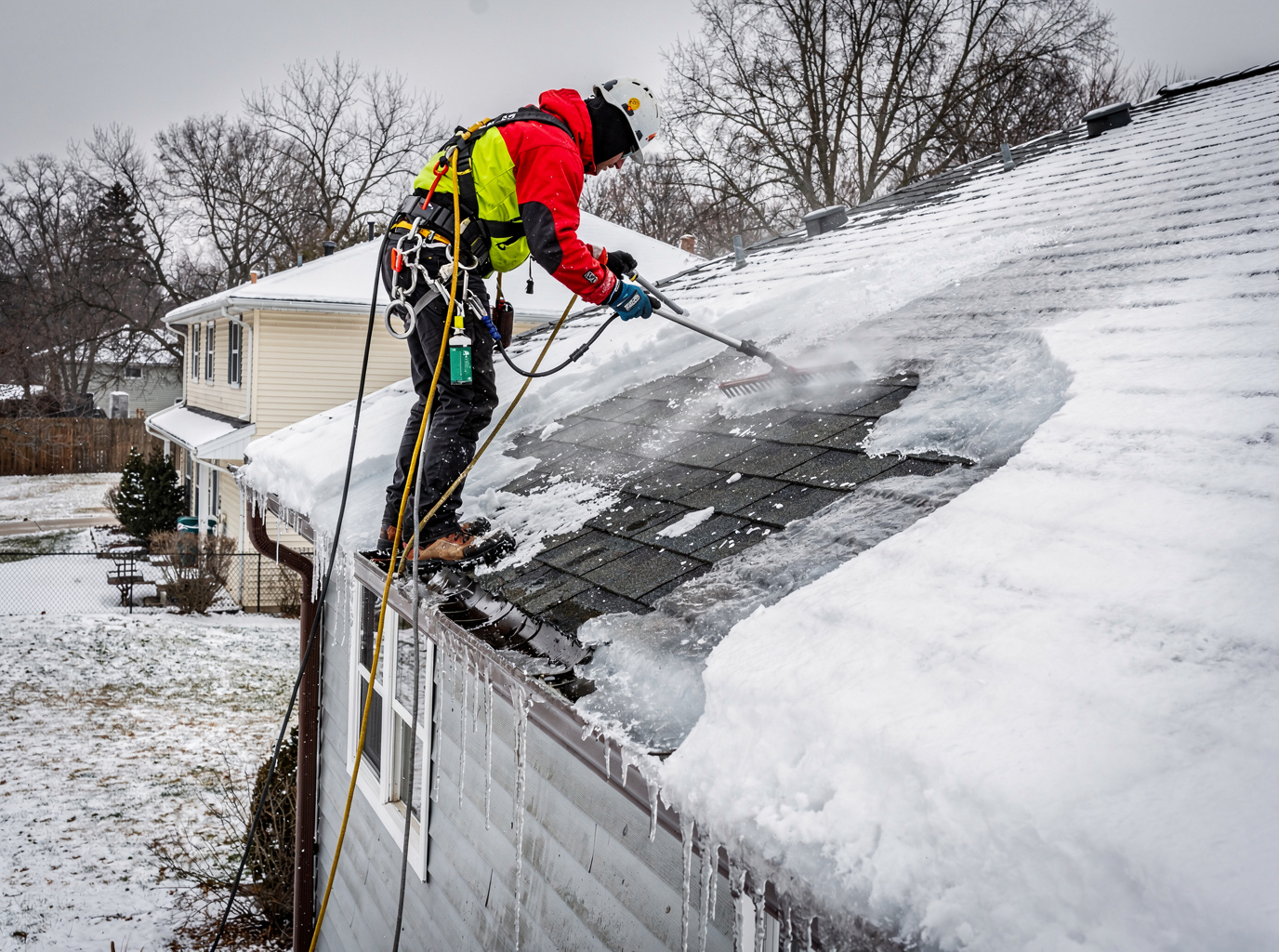
Cedar Rapids winters bring repeated freeze-thaw cycles that turn roof edges into ice dams, especially on older homes in the Czech Village and Downtown Cedar Rapids where attics often lack modern insulation. Heat escaping through gaps melts snow that then refreezes at the eaves, backing water under shingles and into living spaces. We use controlled steam wands to melt dams without tearing asphalt or damaging cedar shakes common on pre-1960 stock in these neighborhoods.
Prevention starts with finding why heat reaches the roof deck in the first place. In Northwest Cedar Rapids and Southeast Cedar Rapids, many two-story homes from the 1940s-1970s have knob-and-tube wiring and shallow rafter bays that make adding insulation tricky. We map heat loss with infrared, then add baffles and ridge vents sized for the roof pitch so snow melts evenly instead of pooling. This approach also reduces the load on furnaces during the long cold snaps typical between December and February.
Nearby Marion and Iowa City share the same humid continental climate, but Cedar Rapids properties sit closer to the Cedar River floodplain where humidity stays higher longer after snowmelt. That extra moisture accelerates rot once water gets past the ice dam. We always inspect sheathing and fascia on every job and note any soft spots before they turn into larger leaks the following spring.
Homeowners in the NewBo District often call after seeing water stains on second-floor ceilings during a January thaw. We remove the dam the same day, then install self-regulating heat cable along the lower four feet of the roof to keep that section above freezing until the next storm passes.
Technician insight
In Cedar Rapids, the thing that catches most people out with Ice Dam Removal & Prevention is how 1940s-1960s homes in the Czech Village trap heat along the north-facing eaves because the original rafter bays were never vented properly during our long, humid winters.
Czech Village Ice Dam Leak
Water appeared on a second-floor ceiling during a January thaw. We found a six-foot dam along the north eaves of a 1952 bungalow where missing baffles let attic heat melt snow. Steam removal stopped the active leak, and we added heat cable plus ridge venting so the same section stayed clear through the rest of the winter.
Ice Dam Removal & Prevention Services We Offer
✓Steam Ice Dam Removal
Melt existing dams on site with low-pressure steam to avoid shingle damage on homes in Czech Village and Downtown Cedar Rapids.
✓Heat Cable Installation
Add self-regulating cables along eaves and valleys to stop new dams from forming during Linn County freeze-thaw cycles.
✓Attic Insulation Assessment
Check existing insulation levels and air sealing in older Cedar Rapids attics to locate the heat leaks driving ice dam formation.
✓Ridge Vent and Soffit Repair
Restore proper airflow on homes near Hawkeye Downs and Brucemore where blocked vents trap heat against the roof deck.
✓Emergency Ice Dam Response
Same-day removal for active leaks threatening interiors in the NewBo District and Southeast Cedar Rapids during winter storms.
Ice Dam Removal & Prevention Cost in Cedar Rapids, IA
| Service | Typical Range | What Affects It |
|---|---|---|
| Ice Dam Removal | $300–$650 | Single-story homes in flat-access neighborhoods cost less; two-story or steep roofs in Czech Village add time. |
| Heat Cable Installation | $450–$900 | Length of eaves and number of valleys determine final cost on typical Cedar Rapids ranches. |
| Attic Ventilation Upgrade | $600–$1,200 | Includes new ridge vent and baffles; higher on homes with limited soffit space near the river. |
Ranges are typical for Cedar Rapids, IA and confirmed with an exact written quote before any work starts.
How it works
- 1
Site Assessment
Walk the roof and attic to locate the dam, check for existing leaks, and note roof material and pitch common to the neighborhood.
- 2
Safe Removal
Apply steam or mechanical methods from above while protecting shingles and gutters on older Linn County homes.
- 3
Heat Loss Diagnosis
Use infrared to find where attic heat is melting snow so prevention targets the real source rather than symptoms.
- 4
Prevention Work
Install cables, improve ventilation, or add insulation baffles based on findings from the specific property.
Pricing
Pricing depends on roof access, number of stories, and whether prevention work is added the same day.